Do you know what’s in the food that you eat?
You may wonder why it’s at all important to know how to read and understand labels on some of your favourite foods. Well, knowing what is in the food you eat is a crucial part of a healthier way of eating.
People who are highly sensitive or even allergic to ingredients like nuts, dairy, gluten or eggs often don’t have much of a choice and have to learn to read food labels very carefully. That, however, doesn’t mean that the rest of us don’t need to look at food labels or read what we are in fact eating. We should all be conscious of the amount of added salt, sugar, chemical preservatives, unhealthy fats or other ingredients in our meals. Other aspects that can make one’s food choices better than the next, can be elements like the fibre content, amount of carbohydrates, or the amount of protein that a food can provide.
Do you know how to read food labels?
Learning how to interpret a food label and understand what you are eating is a wonderful habit to develop to make sure that your meals remain healthy. Some pre-prepared, convenience or processed foods can be much higher in added salt, sugar, and unhealthy fats or other hidden ingredients like chemical preservatives or artificial colourants than you may realise. Without having to be a qualified dietician or nutritionist, there are some basics that everyone can apply to make the best choice the next time you are shopping.
Reading food labels is a great way to compare one product to another and to make sure you’re selecting the best option for your family. Every label is designed differently – some with very little information and others can be quite confusing to look at. However, South African food labels should ideally include these two main and important sets of information: firstly, the list of ingredients in a product is mandatory and secondly the nutritional information table, which is recommended but not always provided. Unfortunately, not all labels include both aspects, but work with the information that is indicated to guide you in making the healthier choice when shopping.

Use this guide the next time you look at a food label:
1. Read the list of ingredients to know what’s in a product or food
This should be indicated in order of the highest to lowest quantities of ingredients or elements in the specific food. The first three ingredients on the label typically make up the largest portion of the product. Do look out for elements like added sugar, salt or unhealthy fats. For instance, if any of these are one of the first three ingredients listed, it is a clear indication that there could be lots of it in the product. You may want to look for another option. A good example will be if you compare plain, unsalted nuts with the same kind of nuts but in a salted version, like roasted and salted or peri-peri. Another example is the difference in the salt content of a normal jar of peanut butter versus the option without added salt and sugar. Once you start to familiarise yourself with the kind of information on typical food labels, you will soon be able to make better choices. A label with a long list of ingredients, some of which you may not even recognise or know, could be an indication that the product is perhaps not such a good choice to buy. A good example is the comparison between the long list of ingredients on a tin of prepared soup, to the short list on a tin of pilchards in tomato sauce.
Another tip when reading food labels is to know that some elements are indicated using different names. Some food products may seem as if they don’t contain too much salt, sugar, unhealthy fats or unnatural preservatives, but these ingredients are sometimes called by other names, which could make reading the label very confusing. These are often referred to as ‘hidden’ ingredients. See the list of just some of the alternative names often used, in the lists below.
Foods that are known to have these ‘hidden’ ingredients, are products like processed meats, marinades, sauces, dressings, sweet and savoury snacks or treats and in particular convenience foods and pre-prepared meals. Not all of these elements are necessarily ‘bad’ for you but be aware of the quantity used in a specific food or product.
Alternative names for …
Salt:
Sodium chloride is the chemical name for common table salt; other words to look out for can include
baking soda; bicarbonate; calcium chloride; MSG (monosodium glutamate); nitrates and nitrites as part of the name; potassium chloride, potassium nitrate; sodium benzoate or sodium sulphate and yeast extract to name a few.
Sugar:
Sucrose (table sugar); cane sugar; caramel; concentrated fruit nectar or juice; dextrose; fructose; galactose; glucose; high-fructose corn syrup; honey; lactose; maltodextrin; maltose; molasses or syrups (including golden, maple, glucose; malt; agave) and many more.
Fat:
Animal fat; beef fat (tallow); butter; cream; drippings; ghee; hydrogenated fat or oils; lard or shortening; margarine; milk solids; monoglycerides; nuts and seeds; oils (including canola, coconut, cottonseed; soybean, sunflower and palm oil); trans-fats; vegetable fat.
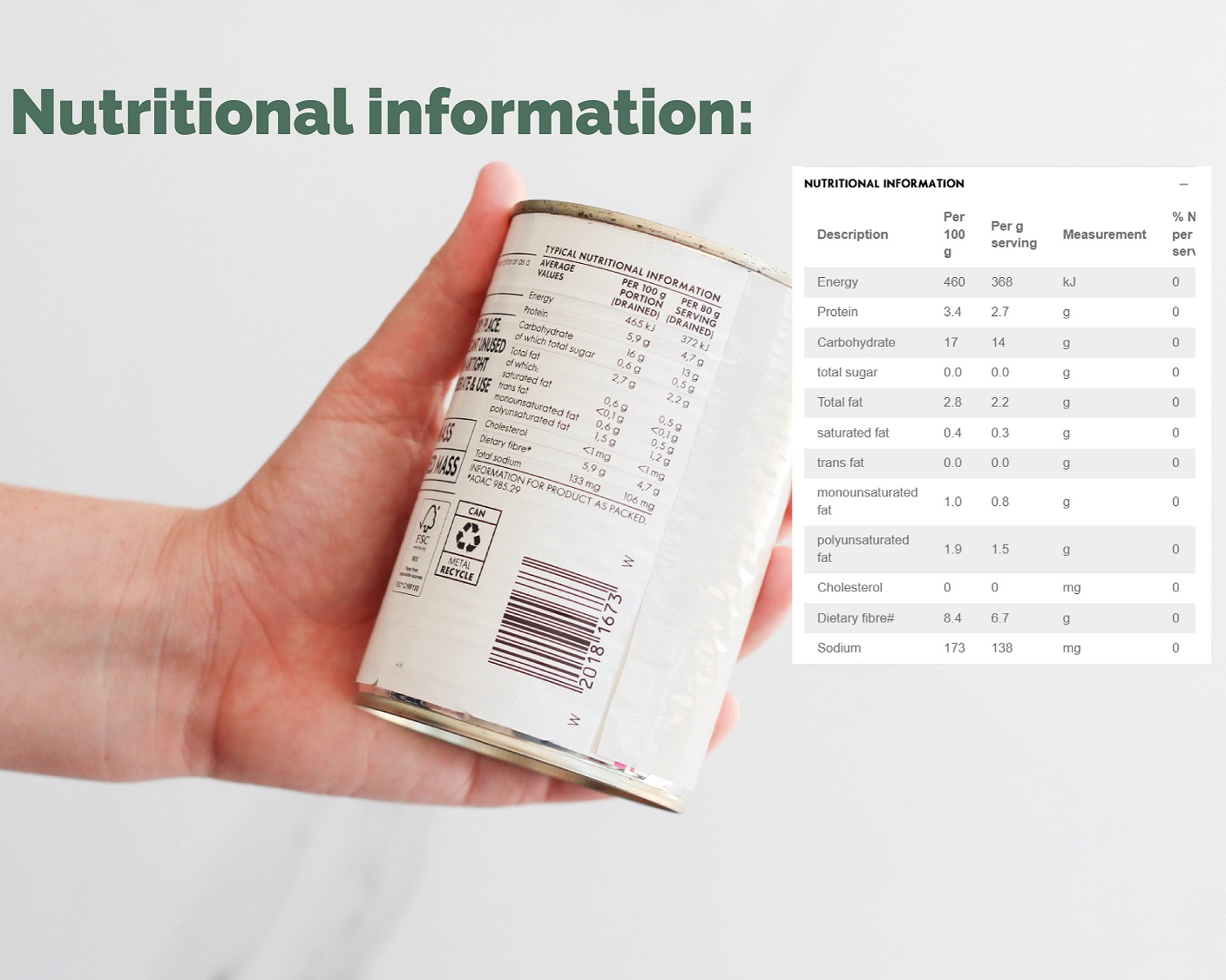
2. Nutritional information table: to know how much of what is in a portion or suggested serving
This part of the label should preferably indicate the energy (kJ’s); protein, fat, carbohydrates, sugar and sodium (salt) content of the specific product. Some labels only specify the basic values, while others will provide a more detailed breakdown of elements like the fat or carbohydrate content. The nutritional information is typically divided into two columns. One column will indicate the values per suggested serving size for that product, e.g. 50 ml or 50 g. The other column indicates the values per 100 g of the product. Use these to compare one product to another and remember to look at the nutritional information of the entire product, within context, to make sure that you choose the better option. Use plain yoghurt as an example: if you only look at the fat content to select a brand, then you may choose the yoghurt with the least amount of fat, but if you didn’t also check how much added sugar it contains (often to give it enough flavour), you may in fact be choosing a yoghurt that is not as healthy as you initially thought. Also see the comment on health claims below.
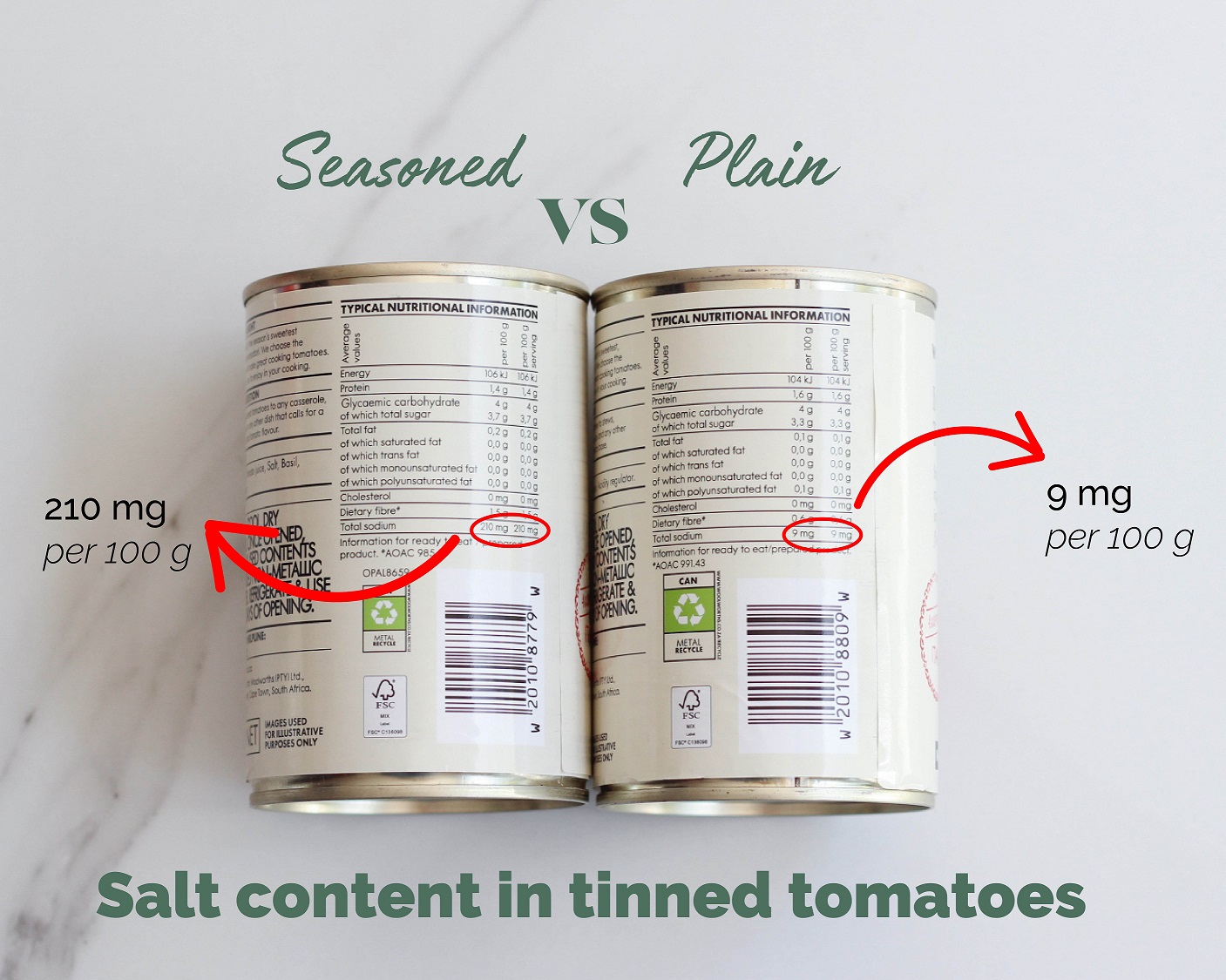
You don’t need to memorise the ideal levels of all the different nutrients, but one benefit of looking at this table, is that you can easily compare the nutritional value of similar foods with one another. For instance, the salt content of a tin of plain chopped tomatoes vs that of a tin of seasoned tomatoes with herbs, garlic, curry powder, etc. You’ll be surprised at how substantially different this can be. See example below.
What are the ideal amounts?
Look for products with no more than 600 mg of sodium (salt) per 100 g. Added sugar should not be more than
5 g (5 ml) per 100 g of the product. This is often indicated as part of the glycaemic carbohydrates on the label. Ideally the total fats should be less than 10 g per 100 g and do look at the different types of fats as well. Saturated fats should preferably be at a much lower level than the mono and polyunsaturated fats. Trans fats should be avoided. Also look at the cholesterol indication to make the best choices.
Other useful information:
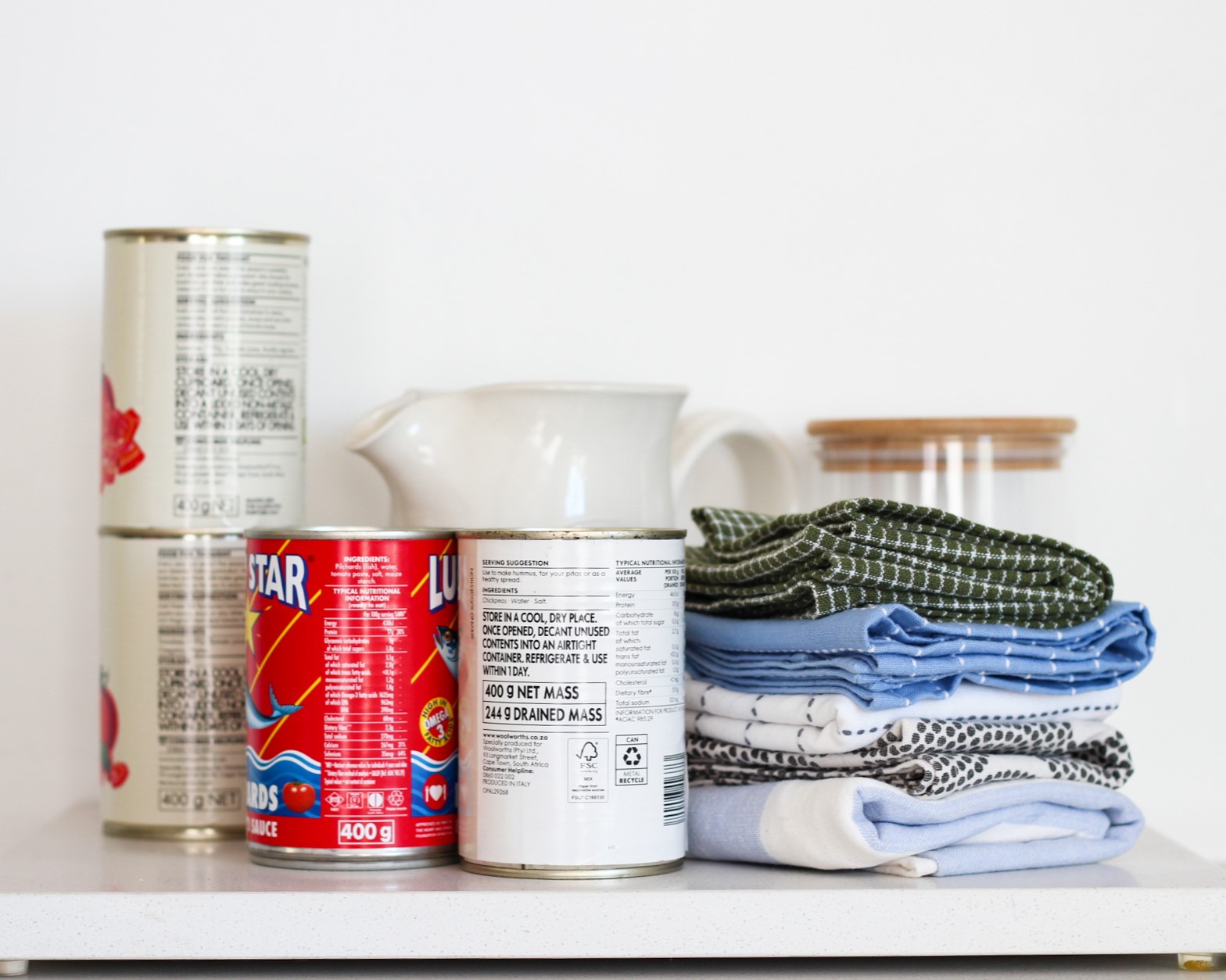
Many labels will also provide storing instructions, like how soon after opening the packaging, the content should be used or how it should be stored. Every product should also indicate the date of manufacturing as well as the expiry, ‘best before’ or ‘use by’ date. For ingredients like tinned beans or chickpeas, the label should also indicate the net mass as well as the drained mass of the product, for ease of use, especially in a recipe that calls for a specific amount of the ingredient. A food label should also indicate if it contains any allergens, like nuts, gluten or dairy. Some products will even indicate if it was manufactured in a factory where the product could have been in contact with allergens, like nuts, and therefore may contain trace elements of the specific allergen.
Health claims
Don’t let the front of the box mislead you! Be aware of packaging that markets a product to you as a ‘healthier’ option – indicating that it is ‘low-carb’ or ‘fat-free’, for instance, and yet it could be much higher in salt, sugar or unhealthy fats. When some elements are removed to make it ‘healthier’ in one aspect, others are often added to provide enough flavour or to lend a specific texture to the product. Rather look at the information on the ingredients list and nutritional table to choose the healthier option.
Make reading food labels a HABIT for life and reap the BENEFITS for years to come.
As the saying goes: Read it, before you eat it!
See my blog on Meal planning, and the Shopping list and pantry staples, to make your weekly menu planning easier. To help you make your meals as balanced as possible, also see the information on the plate model.
The Recipe pages on the website is a treasure trove of ideas for delicious family meals.